

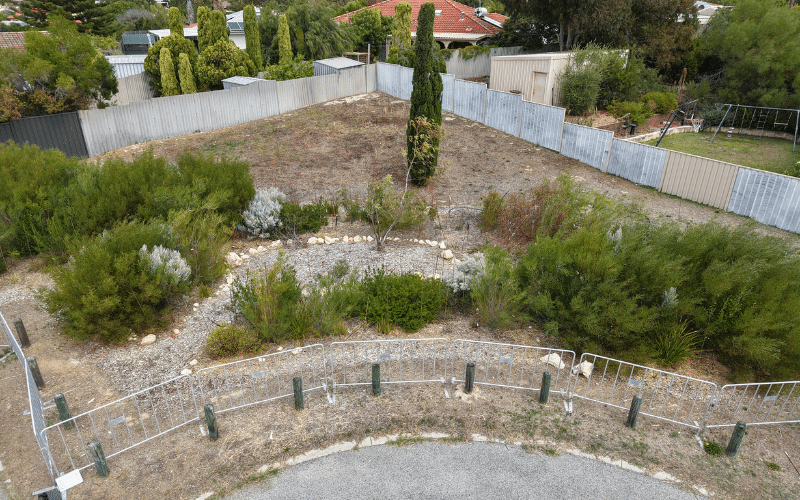
In 2018, it was discovered that mental health disorders accounted for 13% of Australia’s overall disease burden – the fourth-highest disease category (1). Studies have shown that even brief exposure to nature reduces mental fatigue, lowers stress, and improves cognitive function (2).
This social problem is compounded by increasing environmental challenges. Extreme heat is now the leading cause of weather-related injuries in Australia (3), with urban heat islands averaging 5.9°C warmer than surrounding rural areas (4), disproportionately affecting vulnerable populations. These extreme conditions further limit outdoor community activities and reduce opportunities for neighbours to gather and build relationships.
As cities rapidly expand across the country, developments such as housing and office buildings replace natural areas such as bushland; once vital habitats for birds, insects, and native plants – putting local biodiversity at risk (5)(6).
Community pocket forests offer the opportunity to address connected challenges, particularly urban heat, mental health, and biodiversity restoration all at once. By creating shared urban green spaces, they help cool our neighbourhoods, support urban wildlife, and offer a natural boost to our well-being. They also bring people together, giving community members a way to connect, work on environmental stewardship projects, and build lasting relationships. This kind of hands-on, community-led reforestation action not only strengthens our sense of belonging, but also improves quality of life as we care for the environment and each other at the same time.
What are community pocket forests?
Community pocket forests are small native forest ecosystems that bring people together to create, care for, and benefit from urban nature. Using principles adapted from Japanese botanist Akira Miyawaki’s holistic Miyawaki forest planting method, these community-driven projects transform neglected urban spaces into thriving green ecosystems that serve as gathering places, learning environments, and cooling refuges for local residents.
These aren’t your typical urban trees scattered along footpaths or ornamental gardens in parks. They’re dense, biodiverse ecosystems co-designed by communities to meet local needs while aiming to recreate the natural forest structure of a region in compact urban spaces.
Think of it as nature’s original plan compressed into a small urban space, complete with the layers, connections, and functions of a natural forest, and rooted in the community that surrounds it.
How small is “pocket-sized”?
Community pocket forests – also know as tiny forests or micro-forests – can be surprisingly compact:
• Typical size: 100-500 square metres
• Plant density: 3-5 plants per square metre
• Species diversity: 20-40 native species in a single forest
To put this in perspective, a standard suburban backyard could accommodate a thriving pocket forest that supports dozens of native species and creating noticeable cooling effects for the surrounding area. It’s a powerful way to bring nature back, right where we live.
Why do we call them “community” pocket forests?
The word “community” isn’t just part of the name, it’s at the core of why these forests exist. Every forest begins and ends with the people who will live alongside it. While community pocket forests deliver significant environmental benefits such as temperature reduction, biodiversity enhancement and carbon capture, we’ve learned that lasting environmental change happens when communities are empowered to take tangible climate action on their own terms.
Community pocket forests are designed with community wants and needs in mind, ensuring that the space best serves the local community’s aspirations. Community pocket forests become:
• Outdoor learning spaces where people care for their forest, observe its growth, watch wildlife make it their home, and deepen their understanding of natural environments.
• Valued community spaces for neighbourhood life where children learn about local ecosystems, neighbours meet during morning walks, community groups gather, and cultural knowledge is shared across generations. Addressing mental health and well-being, and encourage outdoor physical activity in nature that contributes regenerative wellness outcomes.
• Become cool refuges where local residents can spend time.
• Through the shared experience of creating and caring for their forest, communities develop stronger social networks, increased environmental awareness, and greater collective capacity to address future climate resilience challenges.
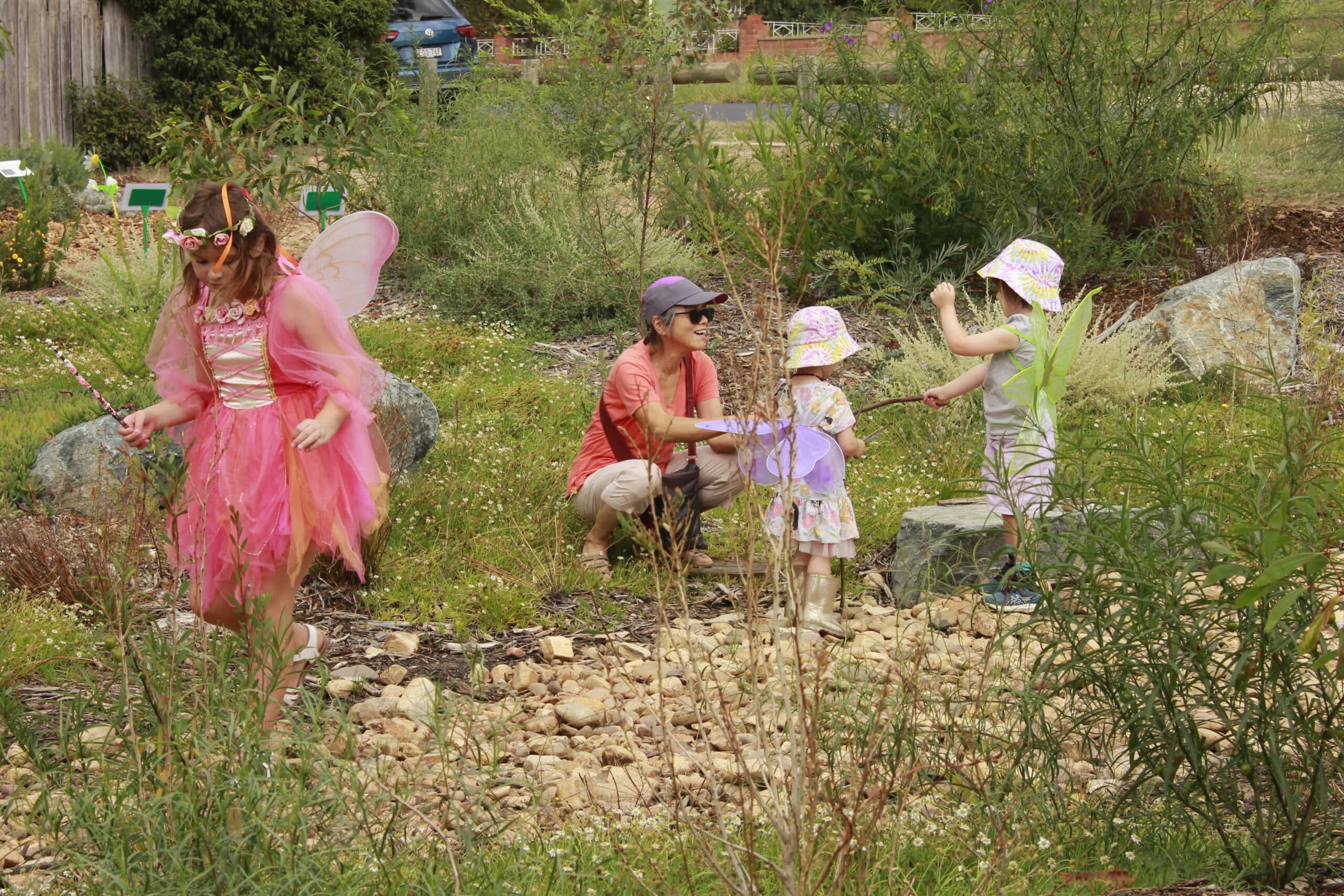
Case study: Led by local residents, Mitch and Bec Porteous, the Queanbeyan community pocket forest has transformed a 526m2 underutilised urban space into a thriving mircoforest and valued community gathering place. In Queanbeyan, 64% of the areas falls under the sever urban heat island category. Studies show that ‘green’ areas (such as irrigated grass and tree cover) can be up to 3°C cooler than surrounding hard surfaces like bitumen and concrete. As this forest matures, we expect to see similar or even greater cooling benefits.
Nature-based solutions that focus on heat-vulnerable communities
Temperatures across Australia’s urban environments are on the rise. Cities create “urban heat islands” that can be an average of 3°C warmer than surrounding areas due to concrete, asphalt, and limited vegetation (7). This heat is felt most in neighbourhoods with little shade and limited access to green space, making already vulnerable communities even more at risk.
The occurrence of extreme heatwave events is increasing, putting serious pressure on public health. But the impacts aren’t felt equally. Older adults, young children, people with chronic illnesses, and low-income households are hit the hardest and often have the fewest cooling resources available (8). This is where sustainable urban reforestation projects and nature solutions become critical for climate resilience.
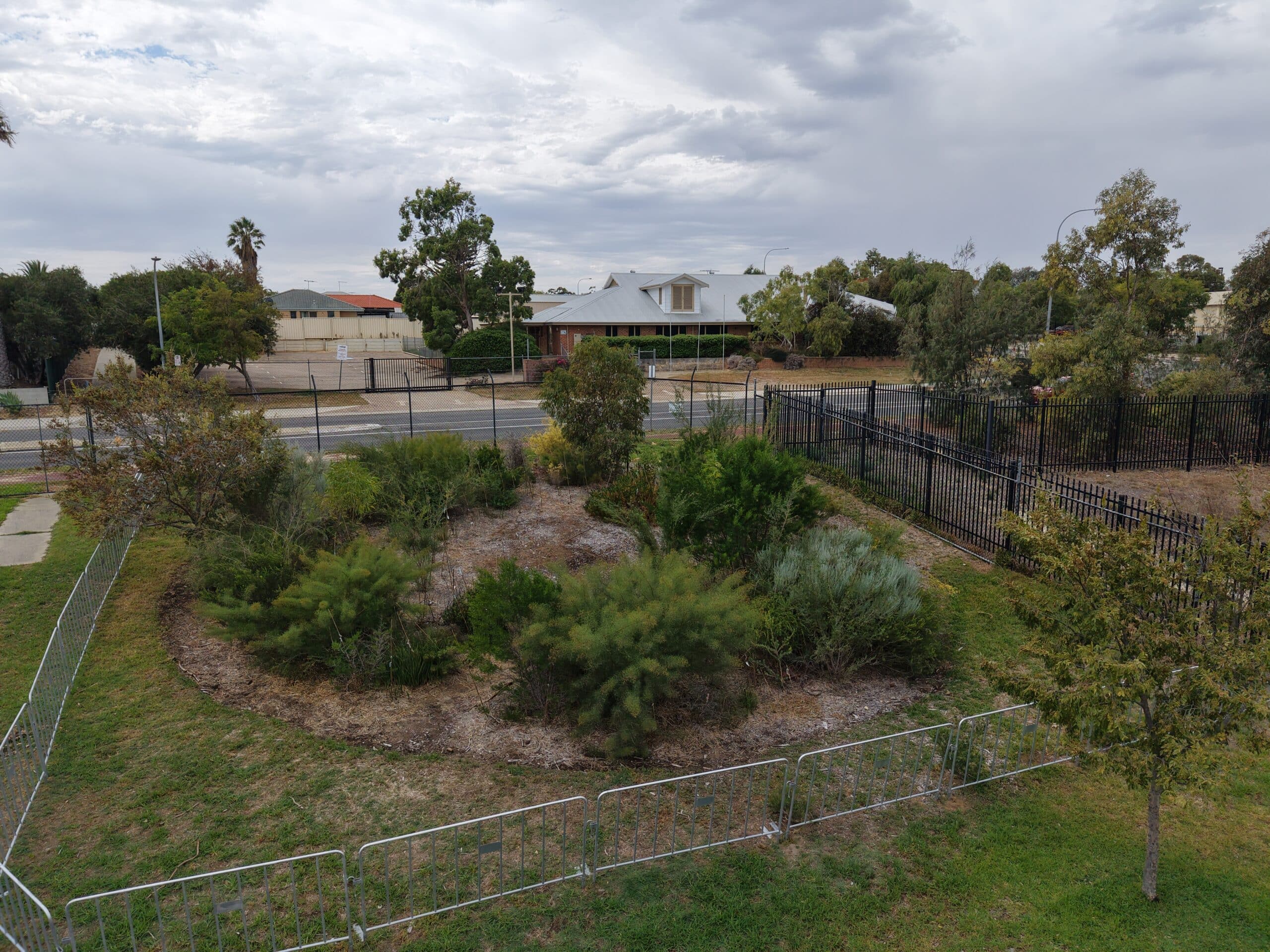
Case study: According to Greener Spaces Better Places (2017), the City of Wanneroo has a high urban heat island risk, ranked 2 out of 5 (with 0 being the highest). Merriwa also falls in the bottom 20% of Australia-wide suburbs for socio-economic advantage (ABS 2021), placing its residents at greater risk during extreme heat. The Merriwa Primary School community pocket forest was planted in collaboration with the Harry Butler Institute, Murdoch University, and the students of Merriwa Primary School. This reforestation project aims to reduce urban heat in one of Western Australia’s most heat-vulnerable suburbs. Children are especially vulnerable to extreme heat. Planting this tiny forest on school grounds offers vital localised cooling, helping protect students while also delivering lasting benefits to the wider community.
Immediate and measurable impact
Community pocket forests, planted using Miyawaki planting principles, create noticeable cooling effects, lowering temperatures by 3-7°C in and around the forest on hot days. For communities vulnerable to extreme heat, that difference can mean the line between safety and serious health risks. These tiny forests demonstrate the power of nature solutions for immediate climate action.
At Carbon Positive Australia, we combine temperature, tree canopy, and demographic data to pinpoint areas where high heat risk overlaps with social vulnerability, especially in economically disadvantaged communities and those facing chronic health issues. This helps us direct our urban forest restoration efforts where they’re needed most, ensuring the greatest impact and benefit for those with limited access to cooling green infrastructure through strategic land management.
Social vulnerability factors
• Socio-economic status: Communities with limited financial resources for air conditioning or healthcare.
• Housing conditions: Areas with poor-quality housing, limited insulation, or overcrowding.
• Health indicators: Neighbourhoods with higher rates of chronic conditions that increase heat sensitivity.
Environmental heat risk
• Urban heat island severity: Areas experiencing the highest temperatures relative to surrounding regions.
• Limited tree canopy cover: Neighbourhoods with minimal existing vegetation.
• Limited access to cooling spaces: Communities far from parks, pools, or air-conditioned public facilities.
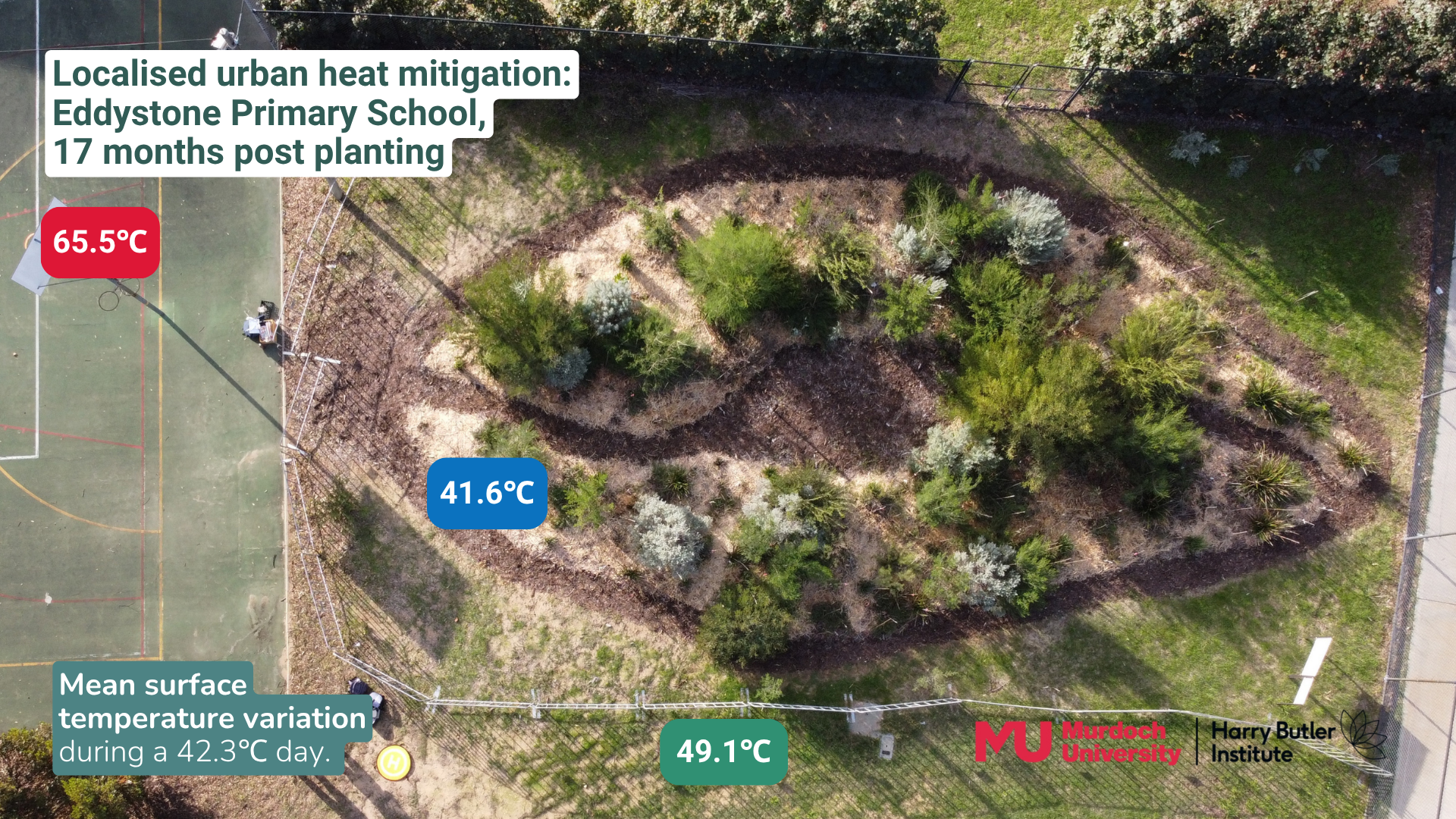
Why we’ve chosen community pocket forests to achieve our community and nature impact
Using principles of the Miyawaki method, adapted for Australian conditions and community-centred implementation, offers unique advantages for addressing heat vulnerability while building community resilience and driving climate action.
Evidence from global implementation demonstrates: temperature reductions within and surrounding forest areas (9), high species biodiversity (floral species composition and fauna attracted over time), rapid maturation (10) with most Miyawaki forests becoming self-sustaining within 3 years, improvements in community well-being and social cohesion, and higher seedling survival rates leading to lower overall costs (11). These outcomes align with SDG 15 (Life on Land) and SDG 13 (Climate Action) targets.
Maximum impact in minimal space: regenerating underutilised urban land
Community pocket forests offer big environmental and social benefits in small spaces. Even pockets of 100 square metres can become forest ecosystems, cooling local temperatures where it’s needed the most. They are a great way to regenerate and revitalise degraded land in urban environments.
Using tree planting principles adapted from the Miyawaki method deliver rapid, measurable environmental benefits, yet simple enough for communities to understand, participate in, and maintain. This balance makes it ideal for community-led environmental action, while creating much needed urban green canopy.
By using a diverse selection of locally native species, we’re not just planting trees – we’re creating cooling infrastructures, restoring natural landscapes and creating habitat for local wildlife through ecosystem restoration.
Research shows that cities can serve as important habitats for native species when appropriately designed (12). Western Australia’s urban areas, many within one of the world’s biodiversity hotspots, have enormous potential to support ecological recovery when communities are equipped with right tools and knowledge for environmental stewardship and regenerative land management.
Where to from here? Addressing urban heat using nature-based solutions
Community pocket forests represent more than urban greening – they’re a model for community-led climate adaptation that addresses environmental and social challenges simultaneously. By focusing on heat-vulnerable communities and putting residents at the centre of design and stewardship, we’re building both cooling infrastructure and community capacity through regenerative land management.
Every forest is proof that nature solutions work best when communities have the power to create and care for the spaces that serve them. In our rapidly warming cities, this approach offers hope: that the communities most affected by climate change can also lead the solutions, one community pocket forest at a time.
Our community pocket forests are growing, and you can be a part of it. Follow the link below for updates on our upcoming tree planting projects, free educational webinars, and other nature-positive news.
Reference list:
(1) Australian Institute of Health and Welfare (2022). Mental health: prevalence and impact.
(2) Barton, J., & Pretty, J. (2010). What is the best dose of nature and green exercise for improving mental health? A multi-study analysis. Environmental Science & Technology, 44(10), 3947-3955.
(3) Australian Institute of Health and Welfare (2024). Extreme weather-related injuries in Australia over the last decade, Web Article, 2 Jul 2024.
(4) Soltani A & Sharifi E (2017). Daily variation of urban heat island effect and its correlation to urban greenery: a case study of Adelaide. Frontiers of Architectural Research 6(4):529–538.
(5) Goddard, M. A., Dougill, A. J., & Benton, T. G. (2010). Scaling up from gardens: Biodiversity conservation in urban environments. Trends in Ecology & Evolution, 25(2), 90–98.
(6) Williams, N. S. G., McDonnell, M. J., Phelan, G. K., Keim, L. D., & Van Der Ree, R. (2005). Factors influencing the loss of an endangered ecosystem in an urbanising landscape: A case study of native grasslands from Melbourne, Australia. Landscape and Urban Planning, 71(1), 35–49.
(7) Stevens, H. R., Graham, P. L., Beggs, P. J., & Hanigan, I. C. (2023). No retreat from the heat: Temperature-related risk of violent assault is increased by being inside. International Journal of Urban Sciences.
(8) Le, M. N., Adhikari, A., & Harrington, M. (2024, November). Vulnerability to extreme heat: The inequitable impacts of a warming Australia [Discussion paper]. The Australia Institute.
(9) Bleichrodt, D. (2022) Eindrapport ‘Elke buurt zijn eigen minibos’ [Final Report: ‘Every neighbourhood its own miniforest’].
(10) Earthwatch Europe, 2023. Tiny Forest Monitoring Report 2023.
(11) Kent County Council. (2024). Urban Tree Establishment: A Trees Outside Woodlands Project Report. The Tree Council.
(12) Garrard, G. E., Williams, N. S. G., Mata, L., Thomas, J., & Bekessy, S. A. (2018). Biodiversity sensitive urban design. Conservation Letters, 11(2), e12411.
